The Glucose Revolution Experiment: Insights After 7 Days
How Monitoring My Glucose Levels Changed the Way I See Food
This post contains Amazon affiliate links. If you buy through them, I may earn a small commission at no extra cost to you.
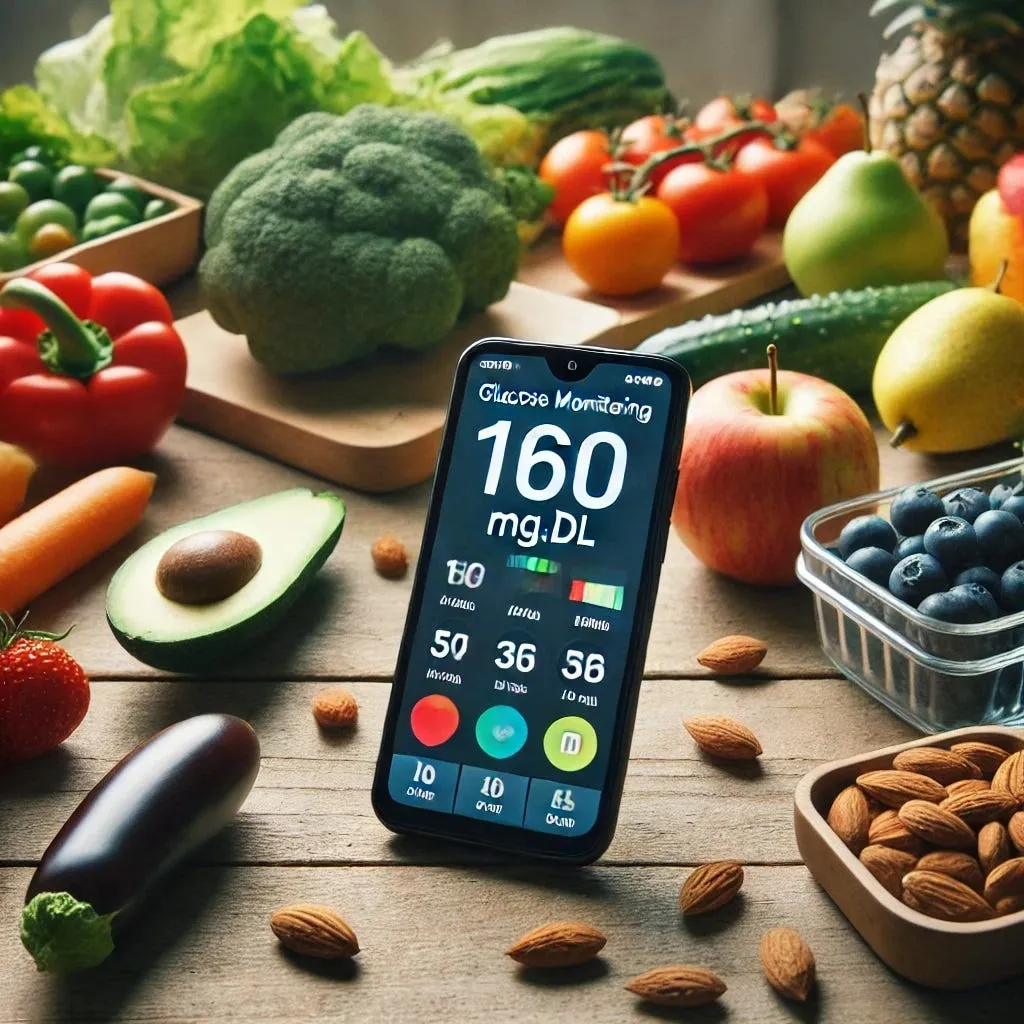
I am always in search of interesting things, and over time, I enjoy reading and experimenting. This is also why I love running and participating in races — the internet is full of resources on running that don’t always say the same thing. For me, it’s a unique opportunity to test and figure out what works best.
The same applies to diets. Before reading The Glucose Revolution, I had already tried Montignac, Atkins, Keto, and fasting, so I didn’t think I could learn anything new in this area.
I was on my way to Valencia to run in the Valencia Half Marathon Trinidad Alfonso Zurich when someone at work recommended the book to me. I decided to get the e-book and planned to browse through it on the plane, as I had a 3–4 hour flight plus a 2-hour train ride to my final destination.
Surprisingly, from the very first part of the book, I was captivated and couldn’t put it down. By the time I reached Valencia, I had only 60 pages left and was excited to have learned something new.
I highly recommend reading the book, and here’s a link to it — my first affiliate link ever shared on Medium:
“Glucose Revolution: The Life-Changing Power of Balancing Your Blood Sugar”
What Is The Glucose Revolution About?
The book focuses on flattening glucose spikes in the blood. Essentially, the higher your blood glucose levels, the more insulin your body pumps out, which can have undesirable effects.
What Are Glucose Spikes?
Glucose spikes are rapid increases in blood sugar levels after consuming foods or beverages high in carbohydrates or sugars. These occur when the body digests these foods quickly, flooding the bloodstream with glucose.
Why Do They Matter?
- Long-term Health Risks: Repeated glucose spikes can lead to insulin resistance, weight gain, and fatigue.
- Energy Crashes: Spikes are often followed by rapid drops, causing crashes, cravings, and irritability.
- Chronic Diseases: Persistent spikes can increase the risk of type 2 diabetes and heart disease.
- Fat Storage: High insulin levels promote fat storage, particularly around the abdomen.
- Cognitive Effects: Fluctuations can impair focus and memory.
To be honest, the most interesting part for me was the link between high insulin levels and increased fat storage. I’ve been struggling with some stubborn fat layers for a while, and this insight caught my attention.
How to Measure Glucose Spikes
Modern technology makes monitoring glucose spikes easier than ever:
- Continuous Glucose Monitors (CGMs): Devices like Dexcom ONE+ or FreeStyle Libre provide real-time glucose readings and trends.
- Traditional Glucose Meters: Use finger-prick tests to measure glucose before and after meals.
- Smartphone Apps: Many CGMs sync with apps to visualize data and identify patterns.
How to Prevent Glucose Spikes
Preventing spikes involves simple dietary and lifestyle adjustments:
- Eat in the Right Order: Start with fiber-rich foods (vegetables, salads), then move to protein and healthy fats, finishing with carbohydrates.
- Pair Carbs with Protein or Fat: This slows digestion and glucose absorption.
- Avoid Sugary Drinks: Opt for water, unsweetened tea, or black coffee instead of sodas or juices.
- Incorporate Vinegar: Drinking 1–2 tablespoons of apple cider vinegar diluted in water before meals can reduce spikes.
- Stay Active After Meals: A 10–15 minute walk post-meal helps muscles use up glucose.
My 7-Day Experiment
I wanted to test this theory, so I bought a CGM, Dexcom ONE+, which was recommended by someone at work.
The device was easy to set up, as it comes with an automatic applicator that attaches the sensor to the skin. Although the needle looks a bit large, I can honestly say I barely felt anything when applying the sensor. It took about three hours for the sensor to self-calibrate, and my experiment began.
I applied the sensor on Friday evening and went to bed. By the next morning, the sensor had auto-calibrated overnight, but it showed some odd readings during the night, which I decided to ignore.
Saturday
The next day, I ate as usual, and here were the measurements:
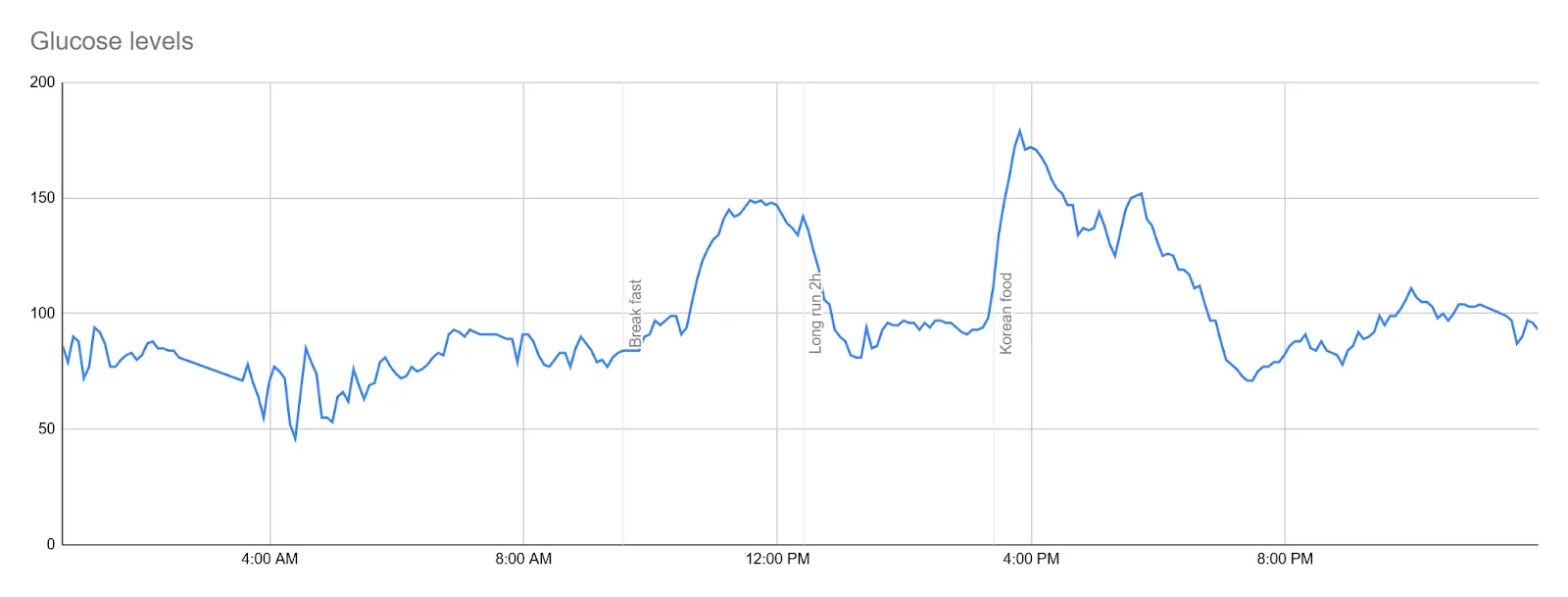
For breakfast, there was a noticeable spike, reaching 150 mg/dL, which then dropped during my 18 km weekend long run. Later, I was invited to celebrate St. Andrew’s Day at a Korean restaurant. Although I ate a dish that included vegetables, I finished the meal with a mochi, and my glucose levels shot up to 179 mg/dL.
This lunch was a classic example of a glucose spike to avoid. Breakfast wasn’t any better in this regard, as it also caused a significant spike.
Sunday
I continued the experiments. For breakfast, I included only one slice of toasted bread, with the rest of the meal consisting of vegetables, an omelet, and cheese. As shown in the data, there was no glucose spike this time.
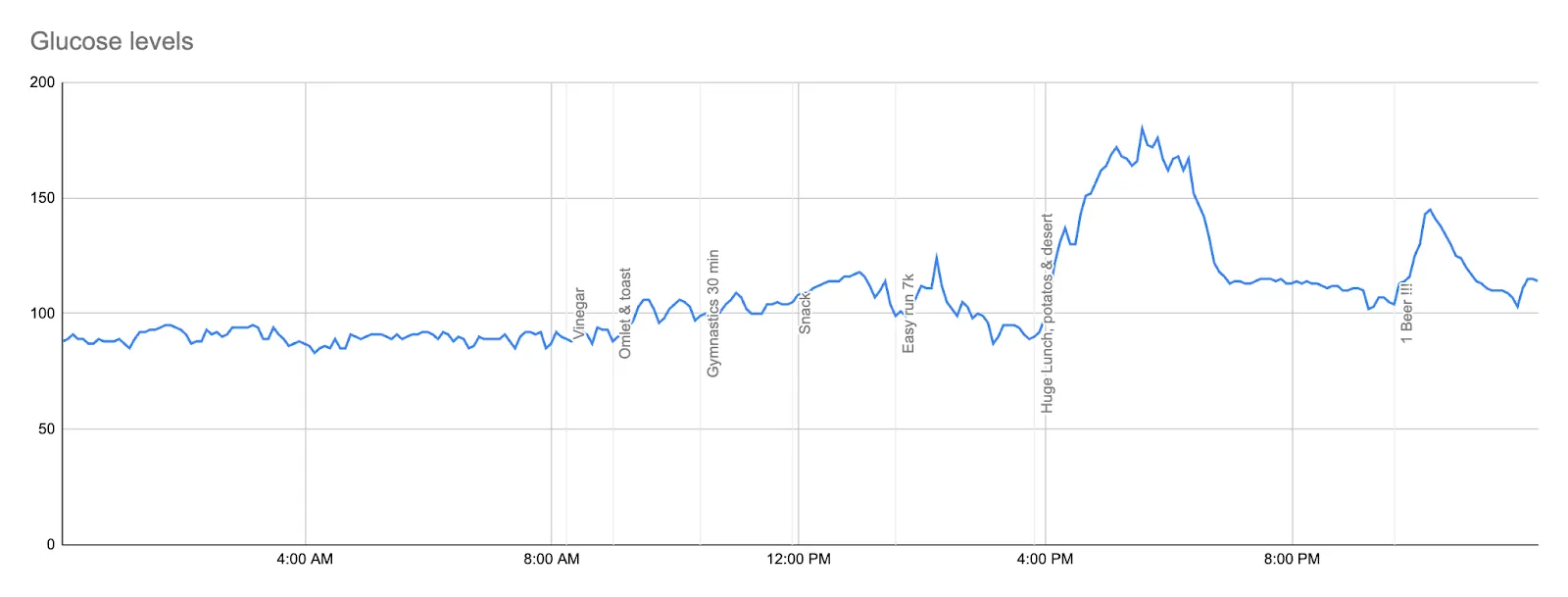
Lunch, however, was a different story. Although I started with fiber (vegetables), followed by meat and potatoes, there was still a significant glucose spike. I suspect the main culprit was the homemade apple pie I had for dessert. Also, notice the damage of one 500-ml beer!
Compared to the Korean meal, this homemade lunch caused a less abrupt glucose increase. I wonder if doing some exercise after lunch would have mitigated the spike.
Monday
Monday was bound to be interesting because it was my first day eating at the office. Unfortunately, the office location isn’t ideal — it’s next to a mall where 95% of the food options are junk food.
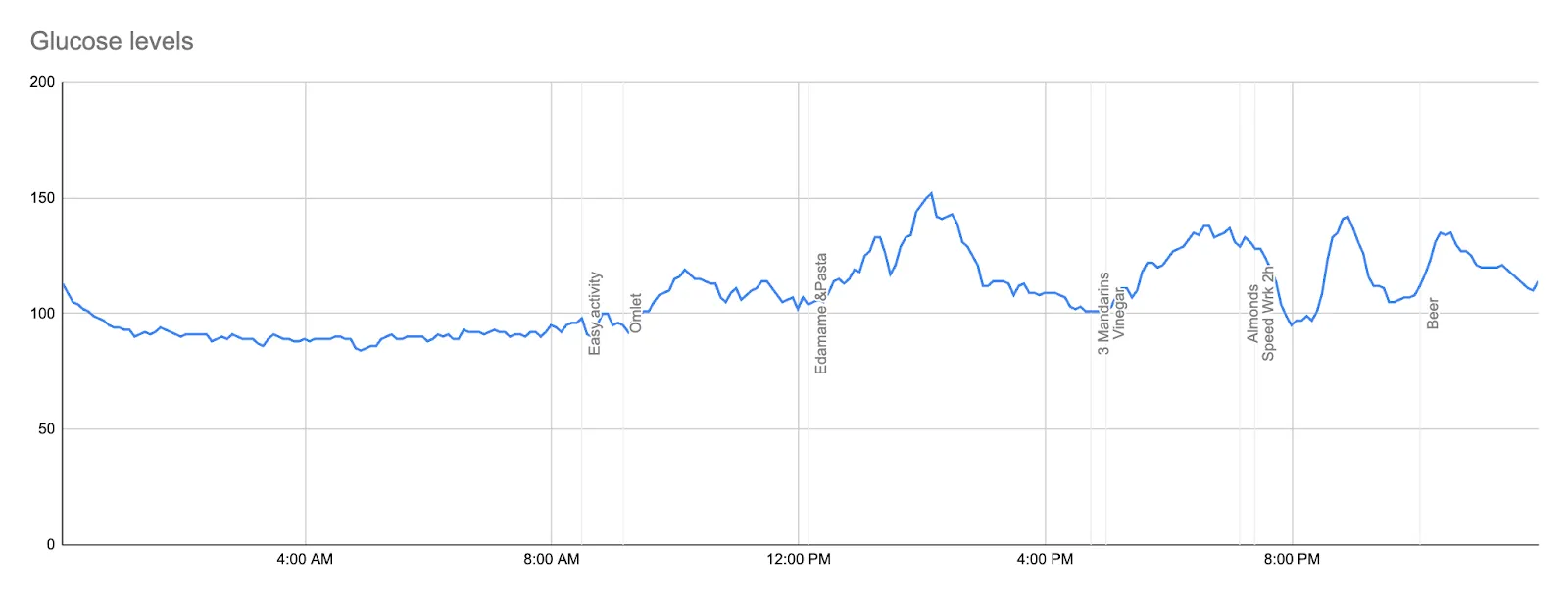
For breakfast, I ate the same as on Sunday: an omelet, a bell pepper, and cheese. As you can see, glucose levels remained under control.
Lunch, however, was a failed experiment. I tried Pasta, and as a starter, I had a piece of Edamame. On my way home, I felt the need to eat something and decided to try some mandarins. As you can see, they caused a spike, but it was a relatively healthy one since fruits also contain fiber.
I don’t quite remember what caused the spikes after my run, but it was most likely due to hydrating with beer.
Tuesday
In the meantime, I’ve learned to add as many notes as possible in the glucose monitoring app to track what influenced my glucose levels, rather than relying on memory.
On Tuesday, I decided to try a popular lunch option in office areas — shawarma.
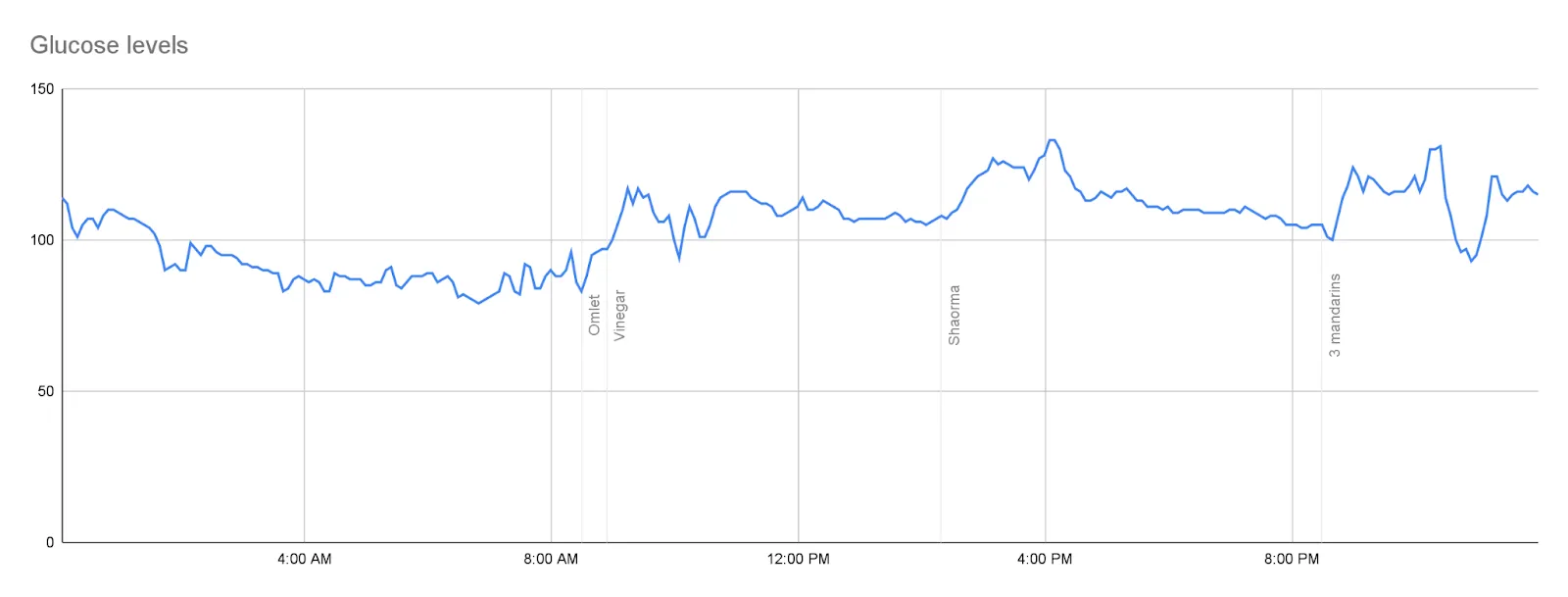
There are several ways to eat shawarma, starting with the unhealthiest option — wrapped in pita bread — which I always avoid, to a healthier option, served on a plate.
I ordered a plate of shawarma and requested plenty of white cabbage, pickles, and lovage, which made up about half the plate. Following the advice from the book, I started with the vegetables, then ate the meat, and finished with a mix of meat and a few fries.
As you can see, the glucose spike at lunch was minimal! In the evening, I had a small snack with minimal effects.
Wednesday
On Wednesday, I wanted to test another lunch spot near the office called Pep&Pepper, which mainly serves rice-based dishes. From what I’ve read before, rice is better than pasta or fried potatoes.
I won’t go into detail about breakfast, as it’s the easiest to keep under control. An omelet with a separate bell pepper and a slice of toasted bread keeps any glucose spike in check.
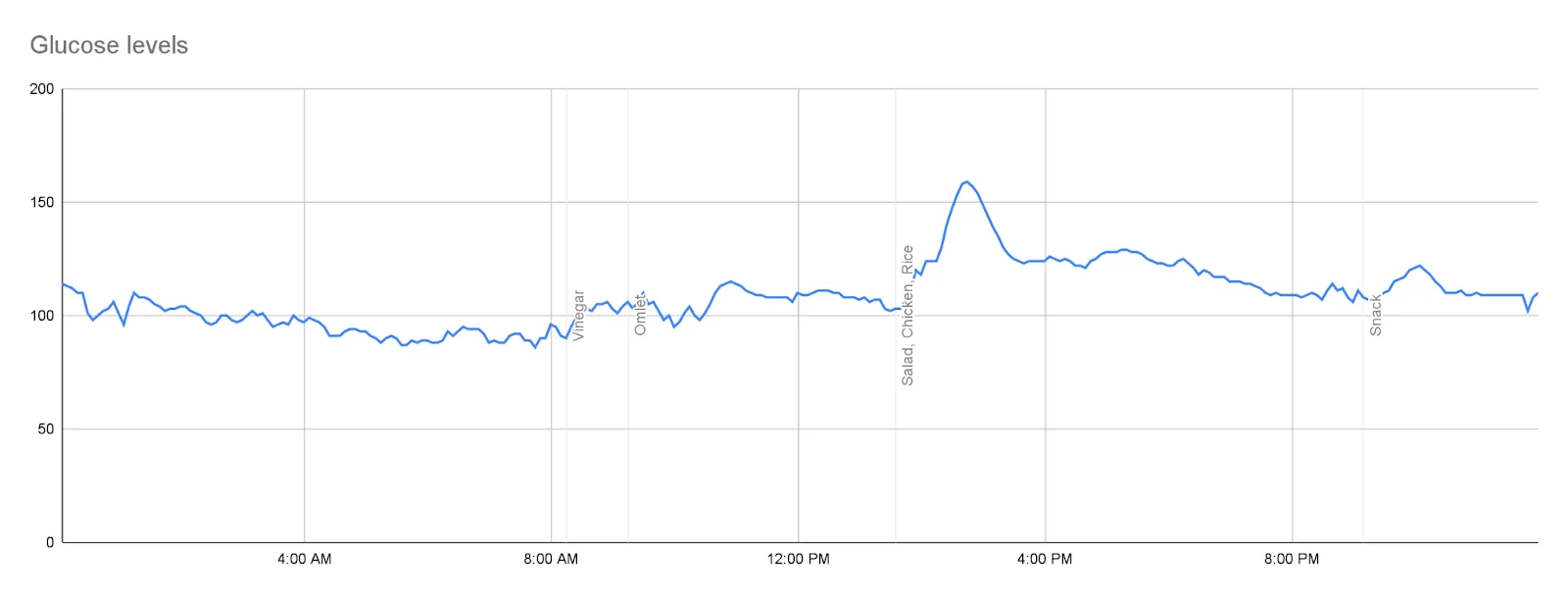
I chose one of my favorite dishes — chicken with cheese. Although I ate the salad first, followed by the chicken, and then combined the chicken with some rice, the graph shows that I experienced a fairly quick and significant glucose spike.
In the evening, any snack with very few carbs doesn’t have a major effect. The key is to keep the portion small and avoid high-carb content. I didn’t shy away from having a slice of bread, but I avoided other types of carbohydrates.
Thursday
My Thursday was a classic day. I had an omelet and a piece of toast for breakfast, then “deconstructed” a shawarma for lunch. In the evening, I had a keto dinner, which included cheese, a bell pepper, and probably some ham.
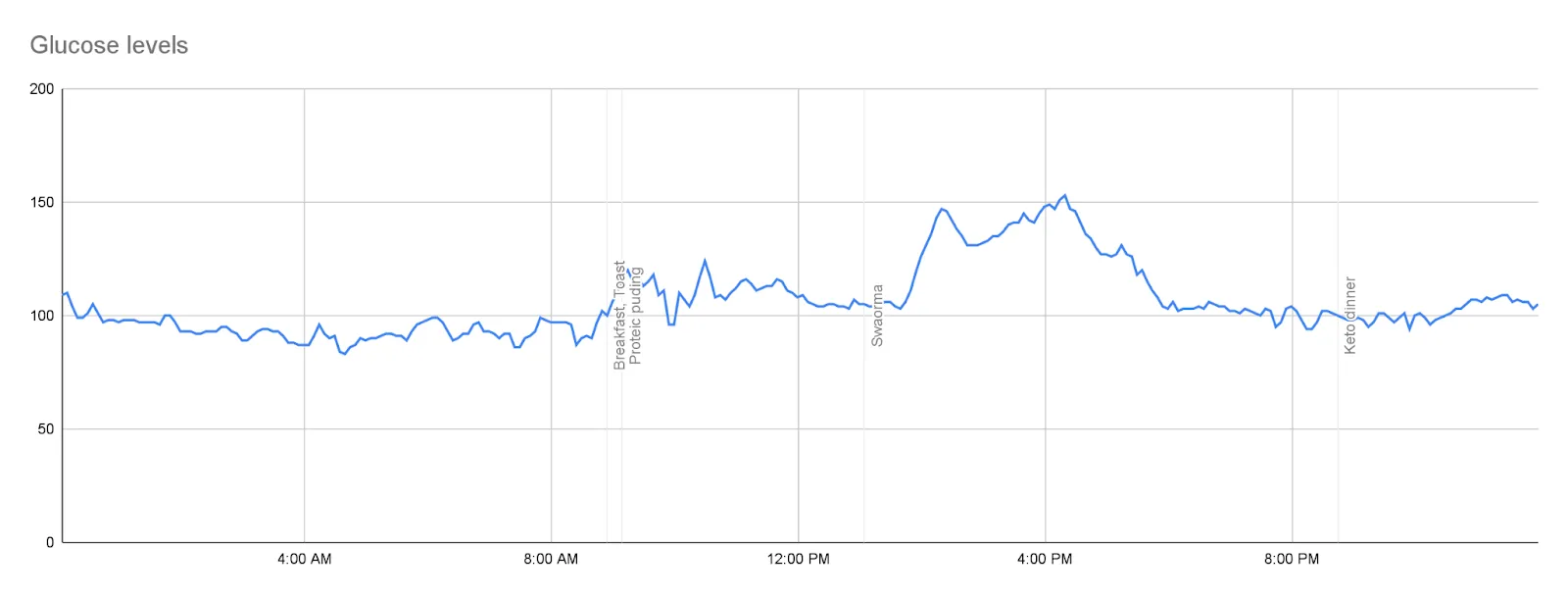
As shown on the graph, it was a good day in terms of glucose spikes. Great job!
Friday
Friday was an even better day than Thursday, as I managed to keep my glucose spikes very low. I wish every day could be like this.
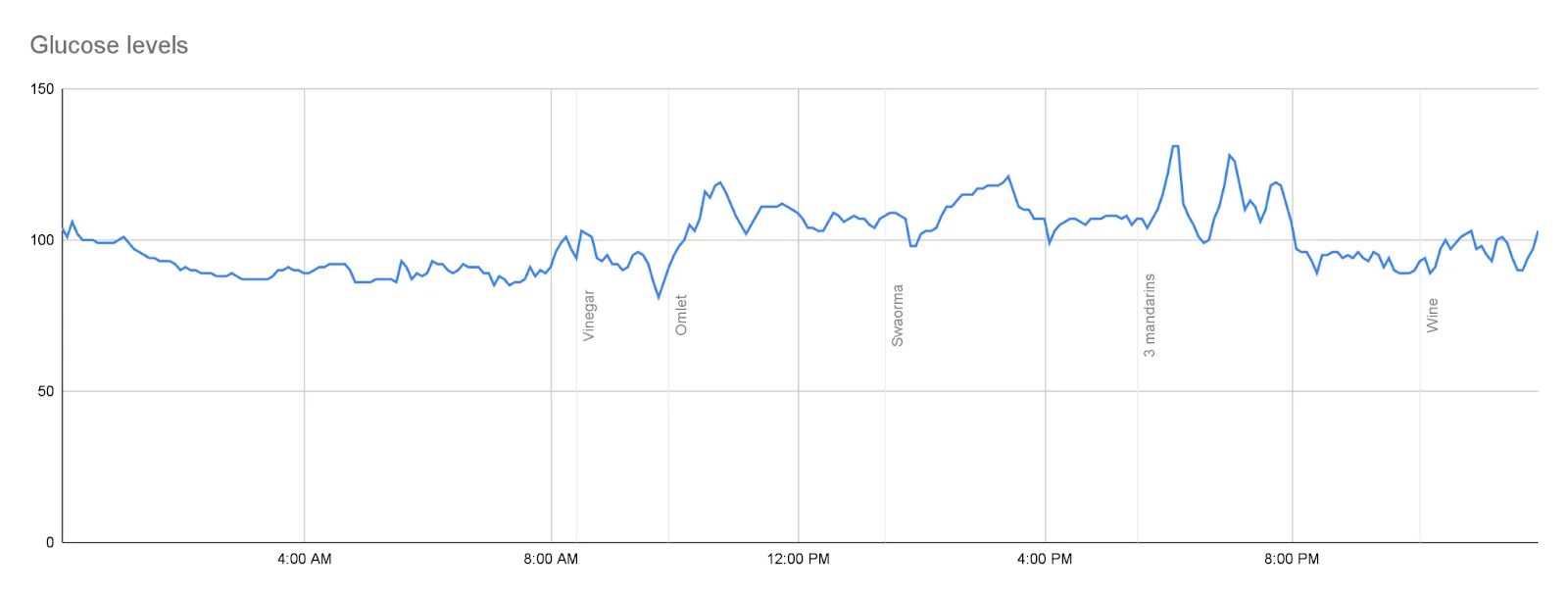
As a snack, I had some mandarins around 5 PM, which caused a small spike but not much above my usual daytime levels. I’m not sure if these small spikes are good or not. In theory, as long as they don’t exceed my baseline by +60, they should be fine.
Saturday
The last day of the experiment ended abruptly. Unfortunately, I managed to damage the glucose sensor and had to remove it.
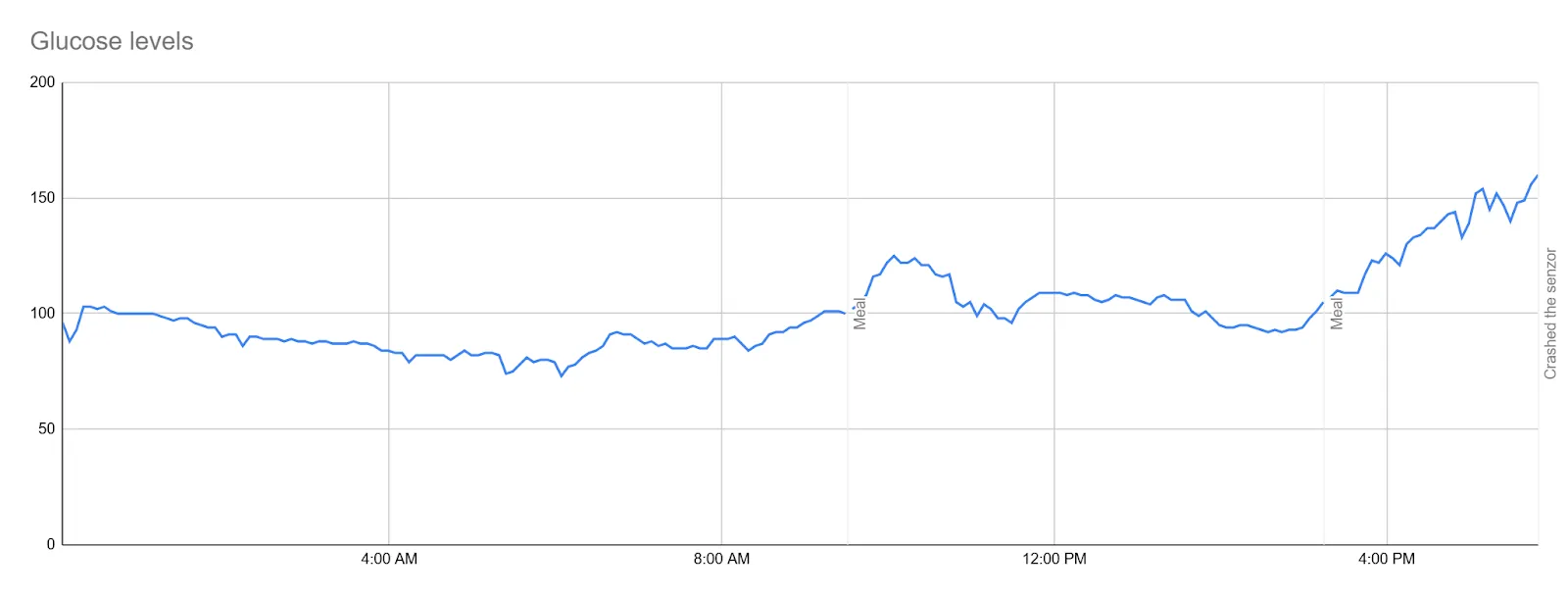
Once again, it seems that lunch served at home is quite hearty and causes a significant increase in glucose levels. However, it doesn’t result in a sharp spike; instead, the glucose rises gradually. Unfortunately, I didn’t get to see how long this spike lasted.
Conclusions
I discovered a couple of interesting things, but overall, my impression is that applying the advice from the book led to better eating habits:
- My craving for sweets has completely disappeared.
- I can eat bread without worrying about counting how many grams I consume.
- I can enjoy a savory dessert.
- I can continue eating what I like as long as I include fiber as a starter.
- I’ve given up beer.
- And the good news? You can drink wine — one or two glasses won’t affect your glucose levels.
Another thing I discovered is that breakfast is easy to manage — you can keep the spikes low. Lunch, however, is more challenging to control. Anything that includes a sweet dessert will cause a glucose spike for me.
If you’re curious about optimizing your health, The Glucose Revolution might have something valuable for you, just as it did for me.
“Glucose Revolution: The Life-Changing Power of Balancing Your Blood Sugar**” (**affiliate link)
I'm a recreational runner with an office job, testing running science on my own legs. More about me.